Go System Apollo Ti

Oh, I hope this good. In for test, the new Apollo Ti from Go System.

The link above is the to regular Apollo, the Ti version is much lighter at 198g, helped by the titanium construction and the absence of a piezo ignition.
A remote canister stove is the way to go in winter and the ingredients are all here in the Apollo. A wide base made of legs which fold away in a lovely fashion, and it folds small enough to fit inside my 900ml Evernew titanium pot with room for a gas, firesteel and Buff. The pot supports are big and grippy, it does feel quite secure although the feet are quite small so placement will be handles with caution. The big burner suits the 900ml pot very well and it has a preheat coil to evaporate liquid fuel, so your gas canister will work upside down too. The flexi is a decent length so the canister will be clear of the stove and shouldn’t interfere with a windshield.
The control is knurled metal and feels smooth in operation, it’s quite small but it should be okay with gloves.

The fact that it goes inside my winter pot is great news, my packsize isn’t expanding beyond that when I carry a canister-top stove, and I won’t feel that extra 100g.
I hope it’s a good performer as well, I had a bad experience last winter with the MSR Windpro so you’ll hear me scream anywhere in the UK if this fails me on a frozen high camp.
Oh, there’ll be more.

Victorinox Forester One Hand

What’s my most-used bit of outdoor kit? That’s easy, it’s a Victorinox Rucksack. It goes everywhere with me at work along with a small shifting spanner, an electrical tester screwdriver and a Petzl e+lite. It’s amazing how many jobs I go to and I can fix it with just the contents of my pocket.
So when the opportunity to test some Victorinox kit came up, I immediately looked for something along the same lines, and the new Forester One Hand was spot-on.

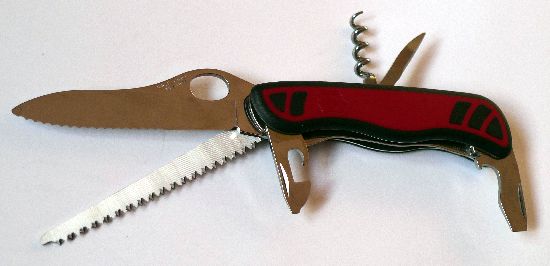
The tools are similar, but there’s lots of differences. The body on the Forester is a blend of different materials, grippy softer rubber at the edges and patched on the faces with a more regular hard plastic making up the faces. Should hit the floor safer and stay in a wet hand better too I hope.
The tools are all genuinely useful ones, only the corkscrew gathers a little dust with me. The saw blade is genius, mine is white with plasterboard dust, and it’s strong too, I regularly saw wood with it, notching floor or skirting boards with it. It’s not there for show, it’s a real blade, its small size means it heats up, so as long as you’re patient you’re fine.
The big locking blade on the Forester is different, it’s a one-handed affair, that big eye lets you open it in your palm with thumb and forefinger. Closing is a careful two-handed operation, the locking mechanism is a sprung leaf which you hold clear to close the blade.
The reamer and screwdrivers all work, fit the screws they’re supposed to and are tough. I’ll say it again, it’s a real tool, not something you get in your Christmas stocking that you keep in a drawer.

The Forester doensn’t have the little tweasers and tooth pick hidden in the handle that I’m used to, but I can live with that if the design has the same longevity as the Rucksack.
As I’ve got some wood burning stoves in for test (more later) this is going out to play as well as to work. I’ll be back.

Stanley Vacuum Bottle

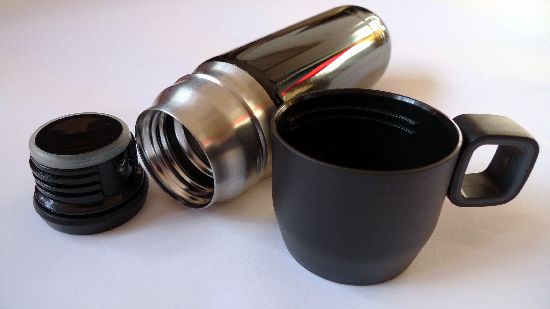
It’s a flask surely? No, it’s a Stanley Vacuum bottle.

I did wonder about this one, I actually wanted to test Stanley’s new stainless water bottle with the leak-proof sports cap, but none were available, so with a shrug I went for this instead. I took out out on the Ben Vane trip last week and now I know why it’s not a flask.
Flasks are well insulated, when you unscrew them and look inside, the smaller ones are usually only a little wider than the neck, all that space is the vaccum er, “filled” gap. On the Stanley bottle, the vacuum gap is much less, closer to my Snow Peak twin-wall titanium mug than a regular flask. This does a few things, the overall size looks like a regular mini-flask, but the capacity is much greater at 472ml, but it will cool quicker with less of a gap to the outside world. In the freezing temperatures last Sunday I got hot cuppas four hours after filling it.
I reckon it’s a good trade off for day trips, more beverage is no hardship. And whether you believe Stanley’s 6-hour hot cuppas deadline or my own 4-hour winter test result, it’s plenty I think, any further out than that I’ll be packing the stove anyway.
A wee happy accident this one, a nice bit of kit.

Bridgedale X-Hale TrailBlaze

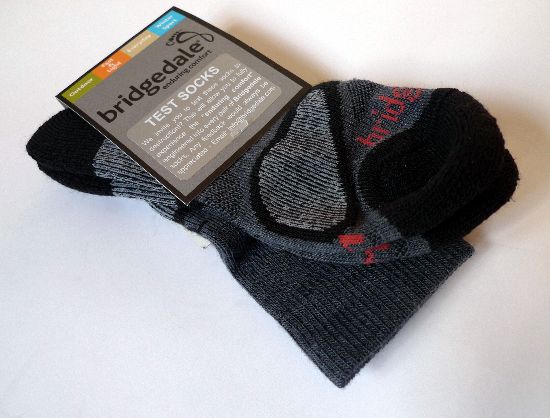
In for test is an update of something that’s already been on my feet the past few years, Bridgedale X-Hale TrailBlaze multisport socks.

When the X-Hales and the Ventums came out I thought they were a real step-up (hmm…) from Bridgedale, zoned fabrics, minimal padding, an asymmetric fit on the Ventums, everything a traditional sock isn’t in fact. They proved keepers and my sock drawer is full of new and vintage models of both styles.
The new TrailBlazes are 31% merino with a nylon/polypropylene mix making up the rest, with 1% lycra to keep the fit and shape in good order. They’re a little thicker than the other X-Hales and a good height at the ankle for wearing with mids.
These’ll be fine for lower level winter stuff, good in the new waterproof bike shoes as well I dare say.
Bridgedale tweaked their fit a good while back, and as a size 9 I had to start taking the mediums (up to 8.5) which were a nice snug fit, that way the sock wouldn’t stretch too much in use. I’ll report back on whether the new models sizing is the same and how they do in general. No surprises I hope, I hate when they mess with a good formula.