
We were talking today about this and that over lunch in the canteen of a deserted factory and Kevin Costner’s Waterworld movie came up, a much maligned film which it turned out we all had a soft spot for. The star of the movie was the huge supertanker set, which was a mock up of the Exxon Valdez, a real and well known ship with a bit of a history.
This started wee memory wheels turning, and three names immediately came to mind including accompanying images that have been pressed onto my mind forever from the little black and white telly we had in the 70’s.
The recent BP oil armageddon across the Atlantic is nothing new, and wherever the blame for that lies, the desperation for oil, the hunger for profit, the stupidity of basing a world economy on a finite resource that we burn rather than use as a near inexhaustible construction material will always lead to mistakes, cut corners and crossed fingers while fine lines are swayed over from a height.
Demand creates risk, we’re all to blame.
When I saw the incidents of the past I worried deeply for the oil-soaked birds and the black beaches. The images of stricken, broken, storm lashed ships were powerful and fearful. The same is still true today when I look at the old shaky and grainy footage, but somehow high quality TV coverage and the omnipresent on-site and inon-screen presenter (in new outdoor gear) often diminishes reporting of disasters to just another news “item”.
The most recent disasters around the world have been caught by the people involved on their phones and cameras and while we might wonder about the sense of filming something that maybe about to take your life away, these images are the ones that affect me in the same way as the ones I saw in my childhood. I think this is important, disasters affect people not just places and news presentation slickness diminishes that distinction.

The Exxon Valdez dumped its oil into the sea after running aground in Alaska in ’89 causing environmental mayhem. It’s still floating, after about ten re-namings, as an ore carrier. I love that name changing thing, like changing Windscale to Sellafield, folk will instantly forget about Homer Simpson-esque nuclear safety procedures. Apparently.
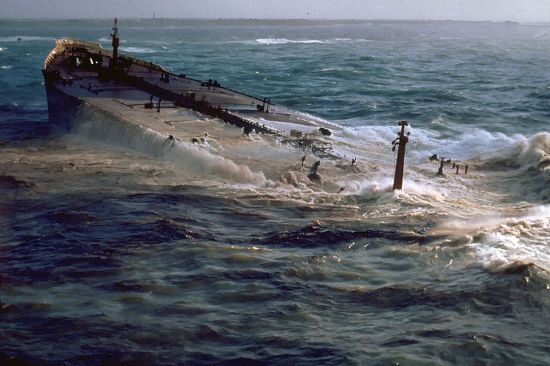
The Amoco Cadiz broke on the rocks of the French coast in ’78. Money sent it to sea, keeping the money stopped them seeking help immediately when the ship got into difficulties in evil weather and mechanical difficulties in case they got labelled as salvage and lost their profit, and that was what sunk it.
The entire cargo was lost to the sea and coast and haunted both for years. The French depth-charged the remains to make damned sure there were no surprises left.
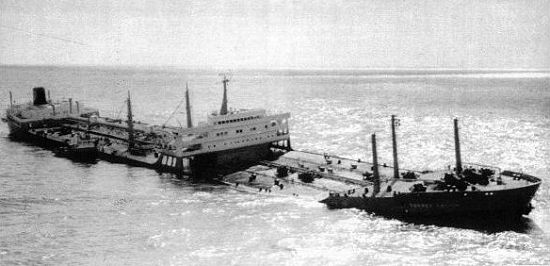
It happened just before I was born, but footage of the wreck seemed to be a constant in the early 70s. Wrecked off Cornwall in ’67 was the Torrey Canyon.
Stupidity grounded it, and life was lost trying to save it. The oil spill was horrendous and the containment and treatment was desperate and unsuccessful. The Royal Navy and the RAF sent ships and planes against it, bombing the shit out of it and then napalming it to try and burn off the oil.
Lessons on how to cope with a similar disaster were learned, but none on how to prevent another disaster seem to have been thought of.
Three names that have stuck with me. Thanks to the internet for the photies.